You Won’t Believe This Blue City Exists—Chefchaouen’s Urban Magic
Nestled in the Rif Mountains, Chefchaouen isn’t just a destination—it’s a feeling. Walking its blue-washed streets feels like stepping into a dream where every corner hums with quiet charm. This isn’t your typical Moroccan city; it’s an urban canvas painted in countless shades of blue, shaped by history, culture, and mountain air. I never expected a place could feel so peaceful yet so alive. Here, the layout isn’t just functional—it tells stories, invites exploration, and wraps you in serenity. The city’s design, rooted in centuries-old traditions, creates an atmosphere unlike any other: one that balances intimacy with openness, stillness with subtle vibrancy. More than a visual marvel, Chefchaouen offers a masterclass in how urban spaces can nurture the human spirit.
The Soul of a Blue Labyrinth
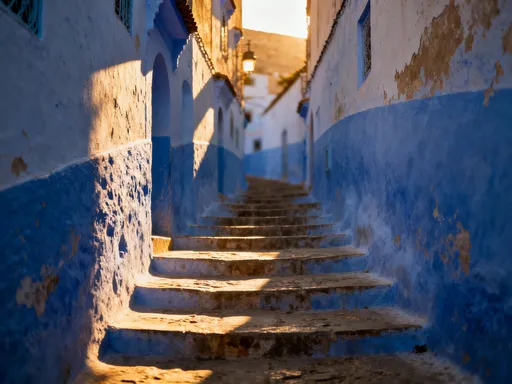
Chefchaouen’s medina is not designed for speed. Its narrow, winding alleys twist and turn with no rigid grid, creating a maze that feels both disorienting and comforting. Unlike the bustling, wide thoroughfares of Marrakech’s souks or the grand symmetry of Fes’s historic core, Chefchaouen’s streets are intimate, often no more than shoulder-width apart. This deliberate irregularity slows the pace of movement, encouraging visitors to pause, look up, and absorb their surroundings. Each step forward reveals a new vista—a splash of cobalt on a doorway, a potted geranium against a pale azure wall, a glimpse of sky framed by overhanging whitewashed balconies.
The city’s urban fabric was shaped not by modern planners but by generations of residents adapting to the steep mountain terrain. Houses climb up the hillsides in terraces, connected by short flights of stone steps that rise and fall with the natural contours of the land. This human-scale design fosters a deep connection between people and place. There are no grand monuments dominating the skyline—instead, the architecture itself becomes the monument, built incrementally, piece by piece, with attention to daily life rather than spectacle. The absence of straight, predictable paths creates a sense of discovery with every turn, making even a simple walk feel like an unfolding narrative.
Psychologically, this layout has a calming effect. The confined spaces reduce visual overload, filtering out distractions and focusing attention on small details—the texture of hand-plastered walls, the chime of a distant fountain, the soft echo of footsteps on stone. In a world saturated with noise and stimulation, Chefchaouen’s labyrinth offers a rare form of mental respite. It does not overwhelm; it gently guides. The city’s design, unintentional as it may have been, aligns with contemporary understandings of restorative environments—spaces that reduce stress and encourage mindfulness through sensory moderation and gentle unpredictability.
Moreover, the medina’s structure promotes social cohesion. Neighbors live close enough to exchange greetings across alleys or share meals on overlapping rooftops. Children play in shaded corners, and elders sit on low benches, observing the quiet flow of life. The city’s scale ensures that no one is ever truly anonymous, yet privacy is preserved through clever architectural gestures—curved walls, recessed doorways, interior courtyards hidden from public view. This balance between community and seclusion is a hallmark of traditional North African urbanism, and in Chefchaouen, it thrives with particular grace.
Why Blue? Unpacking the City’s Signature Hue
The most immediate question visitors ask is simple: Why is everything blue? There is no single definitive answer, but rather a tapestry of historical, cultural, and practical explanations that together give meaning to the city’s iconic color. One widely accepted theory traces the tradition back to Jewish refugees who settled in Chefchaouen in the 15th century, fleeing persecution in Spain. In Jewish mysticism, blue symbolizes the divine presence, with the sky serving as a reminder of God’s watchfulness. Painting homes in shades of blue may have been both an act of faith and a way to mark identity within the community.
Over time, the practice was adopted more broadly by local residents, evolving beyond religious symbolism into a cultural tradition. Some believe the color has protective qualities—warding off mosquitoes or evil spirits—though these claims are more folkloric than scientific. A more tangible benefit is its effect on temperature. In the warm Moroccan climate, light colors reflect sunlight, helping to keep interiors cooler. The blue wash, often made from a mixture of lime and natural pigments, acts as a passive cooling system, reducing the need for artificial ventilation. This blend of aesthetics and function exemplifies how traditional knowledge often anticipates modern sustainability principles.
But beyond utility, the color shapes perception. The blue walls absorb and diffuse light in unique ways, transforming the quality of illumination throughout the day. In the early morning, the city glows in soft lavender tones, mist rising gently from the hills. By midday, the sun brings out deeper cerulean hues, making the walls appear almost luminous. As evening approaches, shadows lengthen and the blue deepens into indigo, creating a tranquil, almost meditative atmosphere. This dynamic interplay between light and color turns the entire city into a living artwork, constantly shifting in mood and tone.
The choice of blue also influences emotional experience. Studies in environmental psychology suggest that cool colors like blue can reduce anxiety and promote feelings of calm. In Chefchaouen, this effect is amplified by the absence of visual clutter—no bright advertisements, no jarring signage, no chaotic traffic. The monochromatic palette creates a sense of harmony, allowing the mind to rest. Even the smallest details—blue-painted planters, blue-tinted fountains, blue door handles—contribute to a cohesive sensory environment. It is not merely decoration; it is environmental design at its most intuitive and poetic.
Urban Life in Slow Motion
In Chefchaouen, time moves differently. The pace of daily life reflects the rhythm of the mountains—steady, unhurried, attuned to natural cycles. Locals rise early, opening wooden shutters and sweeping doorsteps before heading to the central plaza for fresh bread or a cup of mint tea. The main square, Place Outa Hammam, serves as the city’s heartbeat, where vendors set up modest stalls selling olives, herbs, and handwoven goods. Unlike the frenetic energy of larger Moroccan cities, commerce here unfolds gently, without pressure or urgency.
The absence of motorized traffic within the medina enhances this sense of calm. Delivery carts are pushed by hand, and residents navigate the steep paths on foot, often carrying bundles balanced on their heads or backs. This car-free environment makes the city remarkably quiet, broken only by the occasional call to prayer, the clinking of tea glasses, or the laughter of children playing in secluded courtyards. The silence is not empty—it is rich with subtle sounds that invite attentiveness, a contrast to the constant background noise of modern urban centers.
Social life centers around small plazas and shaded corners where neighbors gather to talk, drink tea, or simply sit in companionable silence. These micro-public spaces, often no larger than a living room, function as informal community rooms. They are not designed for large events or performances but for everyday connection—the kind that strengthens social bonds over time. Even in the age of digital communication, these face-to-face interactions remain vital, preserving a culture of presence and mutual recognition.
Tourism has brought change, but not disruption. While visitors fill the streets during peak seasons, local life continues with quiet resilience. Artisans still work in their tiny workshops, weaving wool, shaping copper, or painting ceramics using techniques passed down through generations. Cafés maintain their traditional role as places of rest and conversation, serving sweet mint tea in ornate glasses. The coexistence of tourism and tradition is managed with care—guesthouses are integrated into existing homes, and many families welcome visitors without compromising their privacy or routines. This balance is not accidental; it reflects a deep-rooted respect for place and a commitment to preserving the city’s soul.
Design That Breathes: Architecture and Climate
Chefchaouen’s architecture is not only beautiful—it is deeply functional. Built to respond to the region’s Mediterranean mountain climate, the homes and streets are designed to stay cool in summer and retain warmth in winter. Thick earthen walls made of rammed earth or stone provide natural insulation, absorbing heat during the day and releasing it slowly at night. Small, high-set windows limit direct sunlight while allowing for cross-ventilation, drawing in cool air from the valley below.
Upper floors often project slightly over the lower ones, creating shaded walkways along the streets. This architectural feature, known as a katouf in Moroccan vernacular, protects pedestrians from sun and rain while enhancing the sense of enclosure that defines the medina. Rooftop terraces, accessible by steep internal staircases, serve as private outdoor rooms where families gather in the evenings to dine, socialize, or sleep under the stars during hot months. These terraces also function as informal laundry spaces and drying areas for herbs and vegetables, integrating domestic tasks into the urban fabric.
The city’s orientation takes advantage of natural airflow patterns. Nestled between two mountain peaks, Chefchaouen lies in a natural corridor where breezes flow consistently through the medina, carrying away heat and humidity. Urban planners centuries ago may not have used meteorological data, but their intuitive understanding of wind and sun shaped a layout that remains effective today. Streets are aligned to maximize shade during midday hours, and open spaces are positioned to capture evening light without overheating.
These design elements collectively contribute to sustainable living long before the term became popular. There is no reliance on air conditioning or artificial lighting during the day; the city functions in harmony with its environment. This passive design approach offers valuable lessons for contemporary urban development, where energy efficiency and climate resilience are growing concerns. Chefchaouen demonstrates that sustainability does not require high-tech solutions—it can emerge from centuries of accumulated wisdom and careful adaptation to place.
Hidden Layers: The City Beyond the Blue
While the blue walls dominate postcards and social media, the true richness of Chefchaouen lies in its details. The texture of the plaster, uneven and hand-applied, tells a story of craftsmanship and imperfection. Iron grilles on windows, often painted in deep green or black, feature intricate geometric patterns that echo Islamic art traditions. Wooden doors, some centuries old, bear the marks of time—scratches, faded paint, hand-forged hinges—each one a testament to enduring use.
Look beyond the color, and you’ll notice the subtle variations in material and form. Some walls are smooth, others rough; some alleys are paved with flat stones, others with irregular cobbles. These differences are not flaws—they are signs of organic growth, where each homeowner contributed to the city’s fabric according to their means and taste. The result is a harmonious diversity, a visual language that speaks of unity without uniformity.
Equally revealing are the spaces that rarely appear in photographs: the narrow staircases tucked between buildings, the hidden courtyards with citrus trees and tiled fountains, the rooftop gardens where thyme and rosemary grow in old clay pots. These are the private realms of daily life, accessible only to residents or invited guests. Yet even from the street, glimpses of these spaces evoke a sense of intimacy and care. They remind us that cities are not just for viewing—they are lived in, shaped by routines, rituals, and relationships.
Photographers often chase the perfect blue wall, but the city’s essence is found in its contrasts—the warmth of wooden doors against cool plaster, the green of climbing vines against blue walls, the golden light of sunset on white rooftops. These moments of visual tension create depth and meaning, turning the medina into a layered experience rather than a flat backdrop. To truly know Chefchaouen is to look beyond the surface, to appreciate not just the color, but the life it contains.
Tourism’s Footprint: Change and Preservation
In recent decades, Chefchaouen has become a magnet for travelers seeking beauty, tranquility, and authenticity. While tourism brings economic benefits—supporting local artisans, guesthouses, and family-run restaurants—it also presents challenges. During peak seasons, especially in spring and early autumn, the narrow streets can feel crowded, and popular photo spots may draw long lines of visitors. Some worry that the city’s peaceful character could be eroded by overexposure and commercialization.
Yet the community has responded with thoughtful stewardship. Waste management systems have been improved, with discreet bins placed throughout the medina to maintain cleanliness. Signage, though minimal, helps guide visitors without disrupting the historic aesthetic. Local authorities work with residents to regulate new construction, ensuring that renovations respect traditional materials and design. These efforts reflect a broader commitment to preserving the city’s integrity, not as a museum piece, but as a living, evolving community.
Importantly, tourism has not led to the displacement of residents or the conversion of homes into purely commercial spaces. Many families continue to live in the medina, maintaining their traditions while welcoming guests. Artisans sell their crafts directly from workshops, offering visitors a chance to engage meaningfully rather than simply consume. This model of community-based tourism emphasizes respect, reciprocity, and sustainability—values that align with the city’s ethos.
The challenge ahead is to maintain this balance. As global interest grows, so does the need for responsible visitation. This means encouraging off-season travel, promoting respectful behavior, and supporting local initiatives that prioritize cultural preservation over profit. The goal is not to limit access, but to ensure that tourism enhances rather than diminishes the qualities that make Chefchaouen special. The city’s future depends not on isolation, but on mindful engagement—with both visitors and residents playing a role in its care.
Finding Your Own Path: A Visitor’s Guide to Meaningful Exploration
To experience Chefchaouen fully, one must move slowly and observe deeply. Rushing through the medina to capture the next photo misses the point of the place. Instead, allow yourself to get lost—gently, intentionally. Wander without a map, let curiosity guide your steps, and pause often. Sit on a low wall with a glass of mint tea. Watch how light shifts on a wall over the course of ten minutes. Listen to the rhythm of daily life unfolding around you.
Engage with locals when invited, but respect boundaries. A smile, a polite greeting in Arabic (As-salamu alaykum), or a quiet nod can go a long way. If an artisan welcomes you into their workshop, take time to learn about their craft. Ask about the dyes they use, the patterns they create, the tools they’ve inherited. These conversations, brief as they may be, create connections that outlast any photograph.
Visit early in the morning or late in the afternoon to avoid crowds and witness the city in its most serene state. At dawn, the streets are nearly empty, filled only with the scent of baking bread and the soft call to prayer. By late afternoon, the golden light enhances the blue tones, creating a magical glow. These quieter hours offer a more intimate encounter with the city, one that feels personal rather than performative.
Be mindful of photography. While the blue walls are undeniably photogenic, remember that people live here. Always ask permission before photographing individuals, especially women and children. Avoid blocking narrow pathways while taking pictures, and refrain from touching or altering any part of the architecture for a better shot. Respectful tourism means recognizing that this is not a stage set, but a home.
Finally, carry the spirit of Chefchaouen with you. Its lesson is not just about beauty, but about intention—how spaces can be designed to nurture peace, connection, and presence. In your own life, consider what it means to create environments that slow you down, invite reflection, and honor the rhythms of nature and community. The blue city whispers these truths gently, if you are willing to listen.
Chefchaouen proves that cities can be more than concrete and noise—they can be sanctuaries of color, calm, and connection. Its urban space doesn’t shout; it whispers, inviting you to slow down and truly see. In a world racing toward efficiency, Chefchaouen stands as a quiet revolution in how we design and inhabit places. Maybe the future of cities isn’t taller buildings—but bluer streets.