You Won’t Believe What Happens During Asunción’s Festival Season
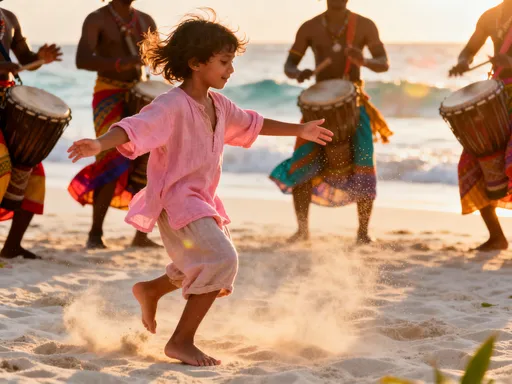
If you think Paraguay is just quiet countryside and dusty towns, think again. I went to Asunción expecting slow days and mild vibes—but got pulled into a whirlwind of color, rhythm, and street celebrations that blew my mind. The city transforms during festival season, alive with traditional music, dancing that never stops, and flavors you can’t find anywhere else. This isn’t just tourism—it’s real, raw culture happening in real time. Locals pour into the streets with pride, generations dance side by side, and the air hums with the sound of harps, drums, and laughter. From national holidays to religious processions and neighborhood carnivals, Asunción reveals its soul in moments of collective joy. This is a city that celebrates not for show, but because celebration is woven into its identity.
The Pulse of Asunción: Where Tradition Meets Celebration
Asunción, the capital of Paraguay, often slips beneath the radar of international travelers drawn to more famous South American cities. Yet beneath its modest skyline and leafy boulevards lies a cultural heartbeat that surges to life during festival season. Unlike staged performances tailored for tourists, Asunción’s festivals are deeply rooted in everyday life, emerging organically from neighborhoods, families, and community groups. These are not imported traditions—they are homegrown expressions of identity, shaped over centuries by the fusion of indigenous Guaraní heritage and Spanish colonial influence. The result is a unique cultural blend visible in everything from language to music, dance, and food.
In the weeks leading up to major festivals, the city begins to shift. Streets are strung with colorful banners, balconies bloom with flags, and public plazas become rehearsal spaces where dancers practice intricate folkloric steps. Local artisans set up temporary workshops, teaching visitors how to weave traditional ao po’i fabric or shape clay whistles used in musical ensembles. Schools host cultural weeks where children perform ancestral songs in Guaraní, the native language still spoken by over half the population. These preparations are not just logistical—they are acts of cultural continuity, passed down from grandmothers to grandchildren.
What sets Asunción apart is the authenticity of its celebrations. There is no separation between performer and audience; everyone is invited to join. A grandmother might lead a line dance in the plaza, a teenager strums a harp on a park bench, and a street vendor sings along while serving chipa. The city doesn’t put on a show—it simply lives its culture, loudly and proudly. For a visitor, this means immersion rather than observation. You don’t watch the festival—you become part of it, even if only for a day. That sense of belonging, of being welcomed into something meaningful and long-standing, is what makes Asunción’s festival season unforgettable.
Carnaval Asunceno: More Than Just Masks and Music
One of the most vibrant expressions of Asunción’s cultural energy is Carnaval Asunceno, a week-long explosion of music, satire, and street theater that takes over the city every February. Unlike the flashy samba parades of Rio or the masked elegance of Venice, Asunción’s carnival is deeply local, driven by neighborhood groups known as murgas and comparsas. These troupes spend months preparing elaborate costumes, writing original songs, and choreographing performances that blend humor, social commentary, and traditional rhythms. The result is a celebration that is as thought-provoking as it is entertaining.
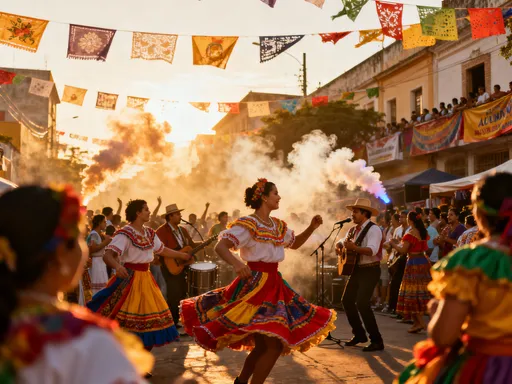
Murgas are musical theater groups that perform satirical skits, often poking fun at current events, political figures, or everyday life in Paraguay. Dressed in matching outfits and face paint, they sing and act in harmony, using humor to reflect on national identity, economic challenges, and social change. Their lyrics, delivered in both Spanish and Guaraní, are sharp, witty, and surprisingly poetic. Comparsas, on the other hand, focus more on dance and spectacle. These costumed dance troupes move in synchronized waves through the streets, their feathered headdresses and glittering capes catching the sun as they sway to the beat of drums and marimbas.
The heart of Carnaval Asunceno beats in the city’s central neighborhoods, particularly along Avenida España and Plaza Uruguaya, where stages are set up for nightly performances. But the real magic happens in the barrios, where local blocks organize their own mini-parades. Families decorate their homes, set up food stands, and dance in the streets until dawn. Visitors are not just welcome—they are encouraged to join in. You might be handed a tambourine, taught a simple step, or invited to sing along to a chorus. There’s no VIP section, no ticketed seating—just people, music, and movement.
What makes this carnival special is its accessibility and sincerity. It’s not a commercialized event driven by sponsors or tourism boards. It’s organized by volunteers, funded by community donations, and sustained by passion. Children dance alongside elders, neighbors collaborate on costumes, and strangers become dance partners. For those who experience it, Carnaval Asunceno is not just a party—it’s a living testament to the power of collective joy and creative expression.
Independence Day Fireworks and Folkloric Fever (May 14–15)
Every year on May 14 and 15, Asunción erupts in a burst of national pride as Paraguay celebrates its independence from Spain in 1811. These two days are among the most important in the national calendar, marked by flag-raising ceremonies, school parades, folkloric performances, and public concerts that draw thousands to the city’s main squares. The atmosphere is electric, filled with patriotism, music, and a deep sense of historical awareness. Unlike more commercial holidays, Independence Day in Asunción is a heartfelt celebration of identity, resilience, and unity.
The festivities begin early in the morning with formal ceremonies at Plaza de los Héroes and Plaza de Armas, where government officials, military personnel, and schoolchildren gather to honor the nation’s founders. Students in traditional dress perform choreographed routines set to polkas paraguayas—lively, harp-driven melodies that are the backbone of the country’s folk music. These performances are not just for show; they are part of a broader educational effort to pass down cultural knowledge. Many schools spend weeks rehearsing, teaching students not only the steps but the history behind the songs and the significance of the holiday.
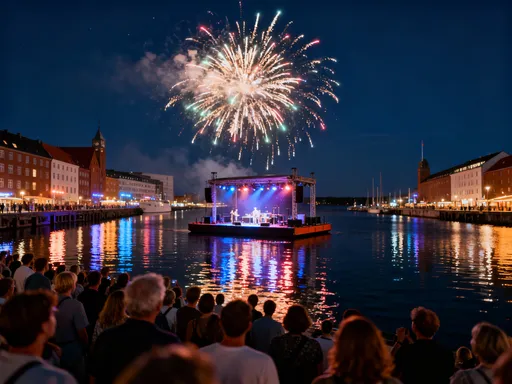
As the day unfolds, the city opens its arms to the public. Free concerts take place along Paseo La Galería, a pedestrian-friendly stretch lined with colonial-era buildings and shaded by trees. Local bands play for hours, alternating between traditional polkas, galopas, and parloras—each rhythm carrying its own regional flavor. Families spread out on the grass, sharing meals of sopa paraguaya and refreshing glasses of tereré, the country’s iconic cold herbal tea. By nightfall, the sky lights up with fireworks launched from multiple points across the city, their colors reflecting off the Paraguay River.
What makes this celebration particularly moving is the intergenerational participation. Grandparents watch proudly as their grandchildren perform, teenagers teach younger cousins the dance steps, and parents record videos to share with relatives abroad. It’s a moment when history feels alive, not as a distant memory but as a living tradition. For visitors, witnessing Independence Day in Asunción offers a rare glimpse into the heart of Paraguayan identity—a culture that honors its past while dancing firmly in the present.
Religious Festivals with a Local Twist: Semana Santa and Virgen de Caacupé
Religion plays a central role in Paraguayan life, and nowhere is this more evident than during the country’s major religious festivals. In Asunción, Catholic traditions are observed with deep devotion, yet they are also deeply local, shaped by Guaraní spirituality and community customs. Two of the most significant events are Semana Santa (Holy Week) and the celebration of the Virgen de Caacupé in December. While these festivals have religious roots, they are also cultural milestones that bring the city together in shared ritual and reflection.
Semana Santa is marked by solemn processions, especially in the historic Barrio Tacumbú, one of Asunción’s oldest neighborhoods. On Good Friday, residents line the streets as statues of Christ and the Virgin Mary are carried through the cobblestone alleys by robed figures. The air is thick with incense, and the sound of mourning songs fills the evening. Yet even in this atmosphere of reverence, there is warmth. Families gather to share quiet meals, and local bakeries sell traditional breads like chipa so’o, made with beef and cheese. The contrast between sorrow and community care is striking—grief is not isolated but shared, held within the embrace of the neighborhood.
In December, the city turns its attention to the Virgen de Caacupé, Paraguay’s patron saint. While the main pilgrimage takes place in the town of Caacupé, about 56 kilometers from Asunción, many residents organize local celebrations in the capital. Churches hold special masses, and community centers host devotional events where people sing, pray, and offer flowers. The devotion to the Virgin is profound—some believers walk the entire distance from Asunción to Caacupé as an act of faith. Even those who don’t make the journey participate by attending neighborhood gatherings, lighting candles, and sharing stories of miracles and gratitude.
What makes these religious festivals unique is the way they blend solemnity with festivity. After a morning procession, food stalls appear selling empanadas, dulce de batata, and fresh coconut water. Artisans set up markets offering handmade rosaries, embroidered handkerchiefs, and clay figurines. Children run between stalls, laughing and eating sweets. The sacred and the everyday coexist, each enhancing the other. For visitors, these festivals offer a chance to witness faith not as a private experience but as a communal rhythm—something lived, shared, and celebrated together.
Street Food & Craft Scenes: Feasts That Fuel the Festivities
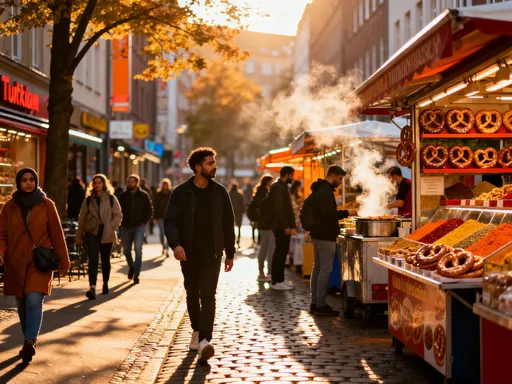
No festival in Asunción is complete without its culinary and artisanal offerings. Food and crafts are not just accessories to the celebrations—they are central to the experience, embodying the flavors, skills, and creativity of Paraguayan culture. From steaming bowls of sopa paraguaya to ice-cold tereré served in hand-carved guampas, the festival season is a feast for the senses. Temporary markets spring up in plazas and along side streets, transforming the city into an open-air bazaar of taste and texture.
Sopa paraguaya, despite its name, is not a soup but a savory cornbread made with cheese, onions, and milk. It’s a staple at every gathering, often baked in large rounds and sliced like cake. Chipa guasu, another beloved dish, is a creamy corn pudding baked in banana leaves, its rich flavor a testament to indigenous cooking techniques. And no festival day is complete without tereré, the national drink made from yerba mate and served cold with medicinal herbs. Passed from hand to hand in shared guampas, it’s a symbol of connection and hospitality.
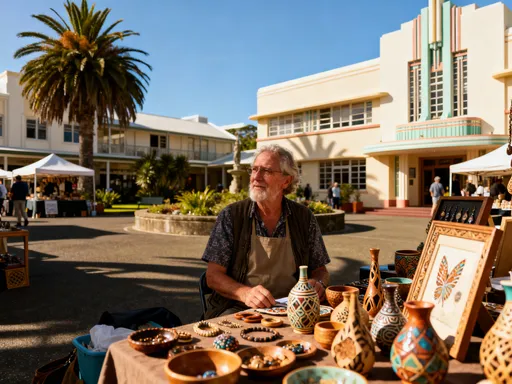
Alongside the food, artisans showcase their crafts with pride. The ao po’i fabric, a delicate lace-like textile woven on wooden looms, is a hallmark of Paraguayan craftsmanship. Women in traditional dress often wear ao po’i blouses, their intricate patterns passed down through generations. During festivals, vendors sell everything from embroidered tablecloths to hand-stitched dresses. Other crafts include clay ocarinas and maracas, woven palm hats, and silver jewelry with indigenous motifs. These items are not mass-produced souvenirs—they are handmade, often one-of-a-kind, and deeply meaningful.
For visitors, eating and shopping locally is more than a recommendation—it’s a way to honor the spirit of the festival. Every bite of chipa, every purchase of a woven scarf, supports a family, a tradition, a way of life. It’s a reminder that culture is not just performed; it is sustained through daily acts of creation and sharing. To taste the food and hold the crafts is to touch the living heart of Asunción’s celebrations.
How to Navigate Festival Time Like a Local
Experiencing Asunción’s festival season is exhilarating, but it also requires some planning. The city comes alive in ways that can be overwhelming for first-time visitors, with crowded streets, loud music, and shifting schedules. To make the most of your visit, it helps to travel with a mix of flexibility and preparation. Knowing how to move through the city, where to stay, and how to stay comfortable can make all the difference in enjoying the festivities safely and authentically.
Transportation is one of the first considerations. During major events, traffic in downtown Asunción slows to a crawl, and parking becomes nearly impossible. The best option is to use public shuttles or ride-sharing services that operate during festival weeks. The MiMov app, widely used in the city, provides real-time updates on bus routes and schedules, making it easy to navigate even during peak times. For those who prefer walking, staying in central neighborhoods like Villa Morra, Las Mercedes, or the historic center puts you within easy reach of main events.
When attending outdoor performances or parades, arriving early is key. Popular viewing spots along Avenida España or near Plaza de Armas fill up quickly, especially on Independence Day or during Carnaval. Bring a lightweight chair or mat, wear comfortable shoes, and dress in breathable, light-colored clothing to stay cool in the summer heat. Temperatures in Asunción can rise above 35°C (95°F), so staying hydrated is essential. Carry a reusable bottle and refill it with tereré or water from public fountains.
Safety is generally not a major concern during festivals, as police presence increases and communities look out for one another. However, it’s wise to stay aware of your surroundings, especially in dense crowds where pickpocketing can occur. Keep valuables in secure pockets or small crossbody bags, and avoid flashing expensive electronics. Most importantly, engage with kindness and respect. Ask before taking photos, learn a few phrases in Guaraní or Spanish, and accept invitations to dance or share food. When you move through the city like a guest who listens and learns, you’re welcomed not as a tourist, but as part of the celebration.
Why These Festivals Matter: Culture, Community, Continuity
Beyond the music, the dancing, and the feasting, Asunción’s festivals carry a deeper significance. They are not just annual events—they are acts of cultural preservation, community building, and intergenerational connection. In a world where globalization often erases local traditions, Paraguay stands out for its commitment to maintaining its unique identity. The festivals of Asunción are where this commitment becomes visible, tangible, and alive.
One of the most powerful aspects of these celebrations is their role in sustaining the Guaraní language. Spoken by millions across the country, Guaraní is woven into songs, chants, and everyday conversations during festivals. Children hear it in lullabies turned into stage performances, elders pass down proverbs during family gatherings, and street vendors call out in rhythmic phrases that sound like poetry. This linguistic continuity is rare in Latin America and a source of national pride. By participating in festivals, even as a visitor, you become part of a living language tradition.
Equally important is the way festivals strengthen family and community bonds. In an age of digital isolation, Asunción offers a model of collective joy. Grandparents teach grandchildren how to play the harp, neighbors co-organize block parties, and entire neighborhoods rehearse dances together. These moments of togetherness are not incidental—they are intentional, nurtured over generations. They remind us that culture is not something we consume, but something we do, together.
Finally, these festivals resist cultural homogenization. They are not designed to mimic global trends or attract viral attention. They exist because they matter to the people who create them. They reflect a worldview where music is prayer, food is memory, and dancing is a form of belonging. To experience Asunción during festival season is to witness a culture that values depth over spectacle, connection over convenience, and continuity over change.
So come not as a spectator, but as an engaged guest. Listen to the harp music. Try the sopa paraguaya. Learn a dance step. Let the rhythm of Asunción move you. You may arrive expecting a vacation—but you’ll leave with something far greater: a deeper understanding of what it means to celebrate not just a nation, but a way of life.