You Won’t Believe What Happened at Thimphu’s Festival – This Is Next-Level Culture
If you’ve ever wondered what it feels like to step into a living tradition, Thimphu’s festival culture is the real deal. I went not knowing what to expect—no fancy tour, just curiosity—and ended up witnessing dances that have been performed for centuries, colors that pop against the Himalayan sky, and a warmth in people that can’t be faked. It’s not just a show; it’s a spiritual heartbeat. This is travel at its most authentic.
Arrival in Thimphu: First Impressions of Bhutan’s Unique Capital
Touching down in Paro and making the drive toward Thimphu, one is immediately struck by how different this capital city feels from any other in the world. Nestled in a wide valley at over 7,700 feet, Thimphu is surrounded by forested peaks that rise sharply into the clouds. The air is crisp, clean, and carries a quiet energy that settles over visitors like a soft blanket. Unlike bustling metropolises where noise and motion dominate, Thimphu moves at a slower, more intentional pace. There are no traffic lights—instead, a uniformed officer waves vehicles through intersections with graceful, almost ceremonial motions, a symbol of how tradition shapes even modern infrastructure.
The city’s architecture blends the old and new with remarkable harmony. Traditional whitewashed dzongs—fortress monasteries with sloping roofs and hand-carved wooden windows—stand beside modest government buildings and family-run shops. Neon signs are absent. Billboards are rare. There is no urban sprawl, no frantic development. Instead, buildings follow strict design codes to preserve Bhutan’s cultural identity. Even new constructions use local materials and traditional motifs, ensuring that modernization does not come at the cost of heritage.
For first-time visitors, especially those accustomed to fast-paced city life, the adjustment can be both surprising and deeply calming. People walk with purpose but without urgency. Smiles are frequent, though not forced. There is a sense of dignity in the way locals carry themselves, often dressed in the national attire: the gho for men, a knee-length robe tied at the waist, and the kira for women, an elegant ankle-length dress wrapped with grace. Tourists are gently reminded to dress modestly, particularly when visiting religious sites, a small gesture that fosters mutual respect.
What stands out most is the absence of chaos. There are no honking horns, no crowds jostling for space, no aggressive street vendors. Life unfolds with a rhythm that feels ancient, almost sacred. This is not a city trying to impress the world—it is a capital that chooses to live by its own values. And this quiet confidence, rooted in centuries of Buddhist philosophy, sets the tone for everything that follows, especially the Tshechu festival, the soul of Thimphu’s cultural life.
The Heartbeat of Thimphu: Understanding Tshechu Festival Culture
At the center of Thimphu’s cultural calendar is the annual Tshechu festival, a multi-day celebration held at the Tashichho Dzong, one of Bhutan’s most revered monastic fortresses. The word "Tshechu" means "tenth day," referencing the tenth day of the lunar month when the festival traditionally begins, honoring the birth of Guru Rinpoche, the saint who brought Buddhism to Bhutan in the 8th century. This is not a tourist event designed for spectacle; it is a deeply spiritual gathering, woven into the fabric of Bhutanese identity.
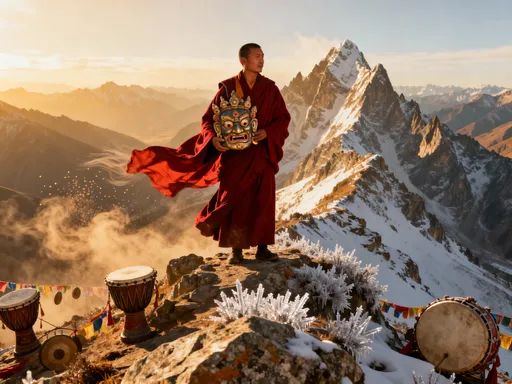
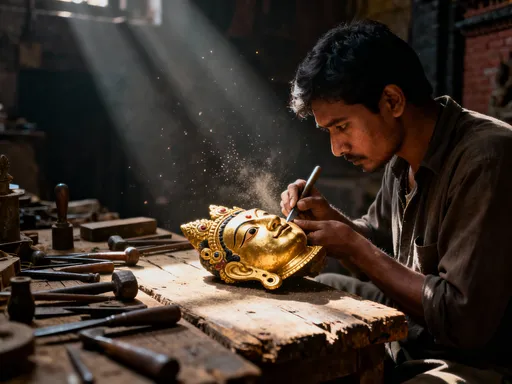
The heart of the festival lies in the cham dances, sacred masked performances conducted by monks and lay practitioners. Each dance tells a story—some depict moral lessons, others portray the triumph of good over evil, and a few are believed to bestow blessings upon those who witness them. The masks themselves are intricate works of art, representing deities, demons, animals, and enlightened beings. Each expression is symbolic: a fanged demon warns of temptation, while a serene Buddha face radiates compassion. The costumes are equally elaborate, made from handwoven silk and adorned with brocade, bells, and ritual objects.
These dances are not rehearsed for entertainment. They are religious acts, passed down through generations with meticulous care. Monks train for years to perform them correctly, as every movement—from the slow turn of the wrist to the stomp of the foot—holds spiritual meaning. Some dances are performed only once a year, preserving rituals that have existed for over 300 years. For the Bhutanese, attending the Tshechu is an act of merit, believed to purify negative karma and bring spiritual progress.
What makes the Tshechu so powerful is its role in community life. Families travel from remote valleys to attend, often camping nearby for the duration. Elders bring children to teach them the stories behind the dances, ensuring that knowledge is not lost. Entire villages come together, reinforcing social bonds and shared values. The festival is not just about preserving the past—it is a living expression of faith, identity, and continuity in a rapidly changing world.
A Day at the Festival: What the Experience Actually Feels Like
On the morning of the main festival day, the atmosphere around Tashichho Dzong begins to shift. As dawn breaks, families arrive with picnic baskets, colorful blankets, and thermoses of butter tea. They settle on the grassy slopes overlooking the courtyard, staking out spots with quiet courtesy. Monks in maroon and saffron robes move through the crowd, offering blessings with small wooden daggers called phurbas, touching each person lightly on the head. The air carries the scent of juniper incense, burning in large metal braziers to purify the space.
By mid-morning, the drumming begins—a deep, resonant beat that echoes off the stone walls of the dzong. Cymbals crash in rhythmic patterns, and long horns known as dungchen sound low, mournful notes that seem to call from another time. The crowd falls silent. Then, from a side gate, the first dancers emerge. Clad in towering headdresses and flowing silk, they move with deliberate slowness, their steps synchronized with the music. The Black Hat dancers, believed to represent protectors of the faith, perform a ritual said to subdue evil spirits. Their dance is hypnotic—part prayer, part performance, entirely spiritual.
For visitors, the sensory overload is profound. The colors are vivid: crimson, gold, turquoise, and emerald swirl in the sunlight. The sound is constant, almost primal, filling the body as much as the ears. The movements are precise, symbolic, and mesmerizing. Yet, beneath the spectacle lies something deeper—a feeling of reverence that permeates the space. Even those unfamiliar with Bhutanese Buddhism often report moments of unexpected emotion: a tightening in the chest, a sudden stillness of thought, a sense of being present in something greater than oneself.
One moment that stands out is the unveiling of the thongdrel, a massive religious tapestry displayed only once a year at dawn on the final day. Measuring over 40 feet tall, it depicts Guru Rinpoche surrounded by deities and enlightened beings. As it is unfurled from the upper balcony of the dzong, the crowd prostrates in unison. Devotees believe that merely seeing the thongdrel can cleanse a lifetime of sins. Whether one believes in its spiritual power or not, the sight is undeniably moving—a convergence of art, faith, and collective hope.
Beyond the Dance: Hidden Moments That Define the Festival
While the cham dances are the centerpiece, some of the most meaningful moments at the Tshechu happen in the quiet spaces between performances. On the hillside, an elderly woman sits cross-legged, turning a copper prayer wheel with steady hands. Each rotation, she whispers mantras, her eyes closed in concentration. Nearby, a group of children mimic the dancers’ steps, laughing as they stumble over their own feet. These unscripted scenes reveal the festival’s true essence: it is not a performance for outsiders, but a lived tradition, deeply embedded in daily life.
Conversations with locals often begin with a shared cup of butter tea, a salty, creamy drink made from yak butter and tea leaves. Offered with a smile and a soft "chi kham lo," meaning "drink a little," it is a gesture of hospitality that breaks down barriers. Language may be limited, but warmth is universal. One woman, wrapped in a handwoven kira, points to her grandson and explains in broken English that this is his first Tshechu. "He must learn," she says simply. "Our way is not loud. It is in the heart."
Another quiet moment comes during a pause in the dancing, when a monk walks through the crowd, handing out small pieces of consecrated cake called dar. Receiving it with both hands is a sign of respect, and eating it is believed to carry blessings. There is no rush, no formality—just a quiet exchange of goodwill. These interactions, fleeting as they may be, create connections that linger long after the festival ends.
Photography is permitted in many areas, but there are unspoken rules. Flash is discouraged during sacred dances. Close-ups of monks in meditation are considered intrusive. The best images often come from stillness—watching a mother adjust her child’s scarf, or an old man tracing prayer beads with weathered fingers. These are not moments to capture, but to absorb. They remind visitors that culture is not something to consume, but to witness with humility.
How to Prepare: Practical Tips for First-Time Visitors
For those planning to attend the Thimphu Tshechu, preparation is key to both comfort and respect. The festival typically takes place in September or October, depending on the lunar calendar, so checking the official Bhutanese calendar in advance is essential. Booking travel and accommodation early is strongly advised, as the city fills quickly with domestic and international visitors. While Thimphu has a range of guesthouses and boutique hotels, many opt for guided tours that include transportation, meals, and festival access.
Dress plays a crucial role in showing respect. Given the high altitude, layers are recommended—mornings and evenings can be chilly, even in autumn. However, clothing should also reflect modesty. Shoulders and knees should be covered, especially when entering religious areas. Many visitors choose to wear a gho or kira for part of the day, not only to blend in but to honor local customs. Comfortable walking shoes are a must, as the dzong is built on uneven terrain and requires climbing several stone staircases.
When it comes to behavior, silence during key rituals is expected. While photography is allowed in most outdoor areas, it should be done discreetly and without disrupting the ceremony. Avoid pointing with fingers, stepping on prayer flags, or turning your back to sacred objects. If offered a blessing, accept it with both hands and a slight bow. These small gestures go a long way in building trust and showing appreciation for Bhutanese values.
Finally, patience is perhaps the most important tool. The festival does not follow a strict timetable. Dances may start late, rituals may extend longer than expected, and crowds may shift unpredictably. Embracing this fluidity is part of the experience. There is no need to rush. The Tshechu is not about seeing everything—it is about being present for anything.
Why This Festival Changes How You See Travel
In an age where travel often means ticking off landmarks, snapping selfies, and chasing viral moments, the Thimphu Tshechu offers a powerful counterpoint. This is not tourism as consumption. It is travel as participation. There are no staged reenactments, no souvenir shops hawking mass-produced trinkets, no artificial backdrops. What you see is real, rooted in centuries of belief and practice. The dancers are not performers—they are practitioners. The rituals are not for show—they are acts of devotion.
This authenticity fosters a deeper kind of understanding. When you sit on the grass for hours, watching a dance that has been performed the same way for generations, you begin to grasp the value of continuity. You learn that culture is not static, but sustained through daily choices—what people wear, how they speak, what they teach their children. You see how faith, art, and community are not separate domains, but interwoven threads in a single tapestry.
For many visitors, the experience sparks personal reflection. In the silence between drumbeats, there is space to think. In the slow, deliberate movements of the dancers, there is a lesson in patience. In the quiet dignity of the people, there is a model of humility. These are not lessons taught in words, but felt in the rhythm of the festival itself. Travel becomes less about escape and more about connection—less about seeing the world, and more about seeing oneself within it.
The Tshechu challenges the notion that bigger, faster, louder is better. It proves that meaning can be found in stillness, in tradition, in restraint. It invites travelers to slow down, to listen, to observe with reverence. And in doing so, it transforms the journey from a series of destinations into a deeper act of understanding.
Thimphu’s Festival Legacy: Preserving Culture in a Changing World
As globalization reshapes cultures around the world, Bhutan stands as a rare example of intentional preservation. The Tshechu festival is not a museum piece—it is a living tradition, evolving without losing its essence. The government supports cultural education in schools, promotes traditional arts, and enforces national dress codes in public institutions. These policies are not about isolation, but about sovereignty—the right of a people to define their own identity.
Young Bhutanese are encouraged to learn the dances, study the scriptures, and speak Dzongkha, the national language. At the same time, they are not cut off from the modern world. Smartphones are common, internet access is expanding, and many young people study abroad. Yet, there is a conscious effort to integrate modernity without surrendering tradition. The Tshechu festival, broadcast live on national television, is now shared with the world—but its core remains unchanged.
This balance is fragile, but deeply valued. Elders worry that future generations may lose touch with old ways. Yet, they also see hope—in the children who mimic the dancers, in the families who travel for days to attend, in the quiet pride of those who uphold their customs. The festival is not preserved through force, but through love. It is cherished not because it is old, but because it is meaningful.
For visitors, witnessing this commitment is both humbling and inspiring. It raises important questions: What do we choose to preserve in our own lives? What traditions do we pass on? In a world that often measures progress by speed and scale, Bhutan reminds us that true advancement also includes wisdom, harmony, and spiritual well-being. The Tshechu festival is not just a cultural event—it is a statement of values, a quiet resistance to forgetting, and a celebration of what endures.
Thimphu’s festival culture isn’t something you just watch—you feel it in your bones. It reminds us that travel isn’t about checking boxes, but about opening hearts. In a world rushing forward, Bhutan chooses to honor its rhythm, and in doing so, offers visitors a rare gift: timelessness.